


Slow Dancer 19-20
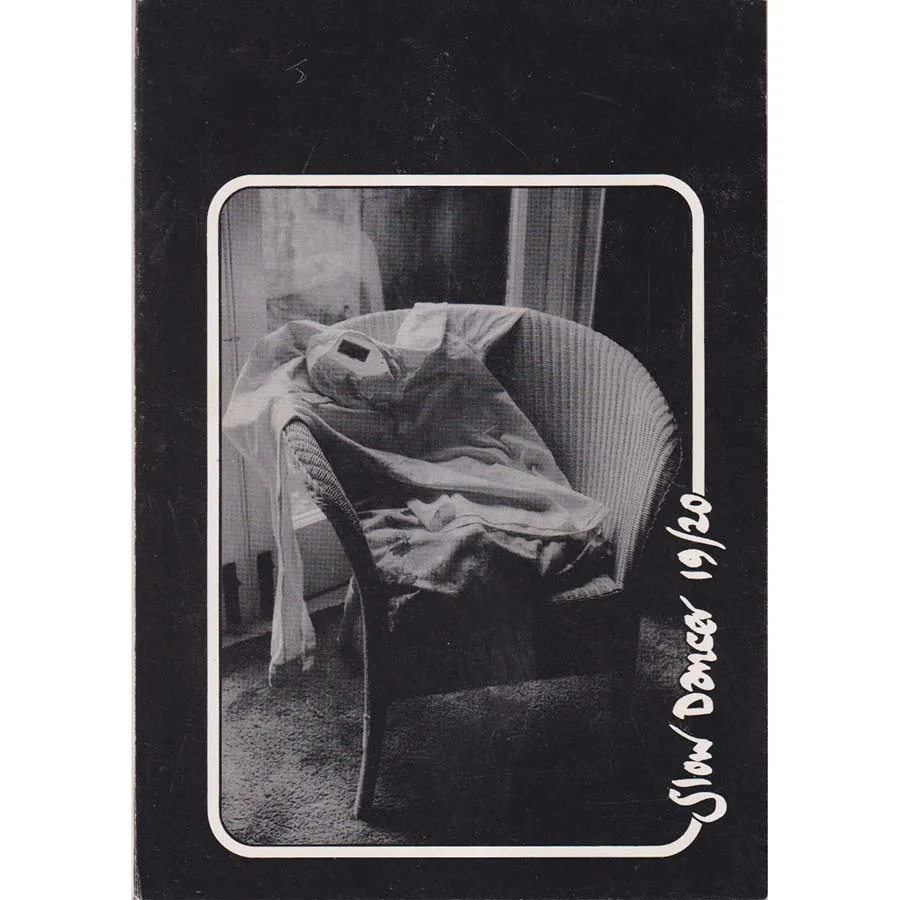
Publisher: Slow Dancer Press
Format: Paperback
ISBN: none
Slow Dancer 19–20 (1987) by John Harvey. Slow Dancer Press. ISBN: None. Condition: Good.
Every so often you stumble across a publication that makes you wonder whether it was ever intended to become a collector’s item or whether it simply emerged because a handful of determined people believed poetry mattered enough to print, staple and post into the world.
Slow Dancer belongs firmly to the latter tradition.
Before the internet gave everyone a blog, a newsletter and several opinions they hadn’t been asked for, Britain’s small-press poetry scene survived through magazines like this: passionately edited, modestly produced and entirely unconcerned with bestseller lists. These were publications built not around commercial success but around conversations—between poets, readers, editors and ideas. They appeared because somebody thought a particular voice deserved to be heard.
A surprisingly radical business model, when you think about it.
This combined Issues 19–20, edited by John Harvey, comes from the heart of that remarkable independent tradition. By 1987, Slow Dancer had already established itself as one of the country’s respected little magazines, quietly introducing readers to contemporary poetry while providing space for writers who were often far more interested in language than literary celebrity.
Which, in fairness, usually ages rather better.
Founded in 1977, Slow Dancer Press would continue until 1999, producing an impressive body of work that far exceeded its modest scale. During those two decades it published thirty issues of Slow Dancer Magazine, alongside dozens of pamphlets, collections of poetry and works of prose. Today, the entire catalogue is out of print, with copies preserved in institutions such as the British Library and the Poetry Library at London’s South Bank Centre.
That is often how genuinely important small presses end up.
Not with fireworks.
With library shelfmarks.
There is something wonderfully democratic about literary magazines. Unlike collected works polished over many years, they capture literature while it is still happening. Writers appear alongside one another before reputations have settled. Experiments sit beside polished masterpieces. New voices quietly introduce themselves without the faintest idea whether anyone will still be reading them thirty years later.
Some will.
Some won’t.
That uncertainty is part of the charm.
Reading an issue of Slow Dancer is rather like wandering through an independent art exhibition instead of a national gallery. There may not be explanatory plaques reassuring you that every contributor is already famous. Instead, you are invited to make up your own mind. Occasionally you encounter a poet who would later become widely recognised. Just as often you discover someone whose work deserved far more attention than history happened to provide.
Second-hand books excel at these little acts of literary archaeology.
The magazine itself reflects an era when poetry circulated through communities rather than algorithms. Editors corresponded by letter. Manuscripts arrived in envelopes. Layout involved rulers, glue and considerable patience. Deadlines were real, but refreshingly free from phrases such as "optimising engagement metrics."
Nobody was worrying about whether a sonnet would perform well on social media.
It simply had to be a good sonnet.
John Harvey’s stewardship helped make Slow Dancer one of those publications whose influence extended well beyond its print run. Independent literary magazines have always served as testing grounds for new ideas and new writers, creating spaces where literature could develop without immediate commercial pressures. Their value is often recognised only years later, by which point the issues themselves have quietly become scarce.
As tends to happen with the best things that nobody thought to keep.
This copy remains in good condition, preserving a fascinating piece of Britain’s small-press literary history. Whether you collect poetry magazines, study the independent publishing movement, admire John Harvey’s editorial work or simply enjoy discovering overlooked corners of British literature, it offers a rewarding glimpse into a vibrant cultural world that existed largely outside the glare of mainstream publishing.
From Crappy Old Books—because not every important publication announces itself with embossed dust jackets and television interviews. Sometimes significance arrives folded neatly into a slim literary magazine, printed in modest numbers by people who cared considerably more about poetry than profit. Slow Dancer reminds us that literature has always depended upon enthusiastic editors working quietly in the background, giving writers somewhere to begin and readers somewhere unexpected to discover them. Decades later, the internet has become infinitely larger than any small press could ever have imagined, yet these little magazines remain oddly irreplaceable. They are snapshots of literary history before anyone knew it was history, and like all the finest second-hand finds, they carry with them the reassuring possibility that the most interesting things were often happening far away from the bestseller lists.
Keep browsing: See more Poetry books Other books by John Harvey
